senses

Our Protective Barrier

It breathes, feels and regenerates. The skin is not only our largest sensory organ, but also one of the most multifaceted human organs, on both a physical and emotional level. We’ve put together some interesting facts below.

It protects our body against environmental influences and closes it off from the outside world. It is responsible for our thermal regulation. And it is an important “outpost” of our immune system to ward off pathogens. The skin is very much alive, and it is constantly changing. Its metabolism exists in an intense interchange of liquids and gases (skin respiration) and can react very sensitively to physical as well as emotional influences. Our skin is in many ways associated with our inner emotional world. As our largest sensory organ, it works with a network of highly specialised sensory cells distributed throughout the body to form the basis of our temperature, touch and pain perception. At the same time, it brings our inner emotional states to the surface and reveals our feelings, for example when we blush or become pale.

Skin Structure
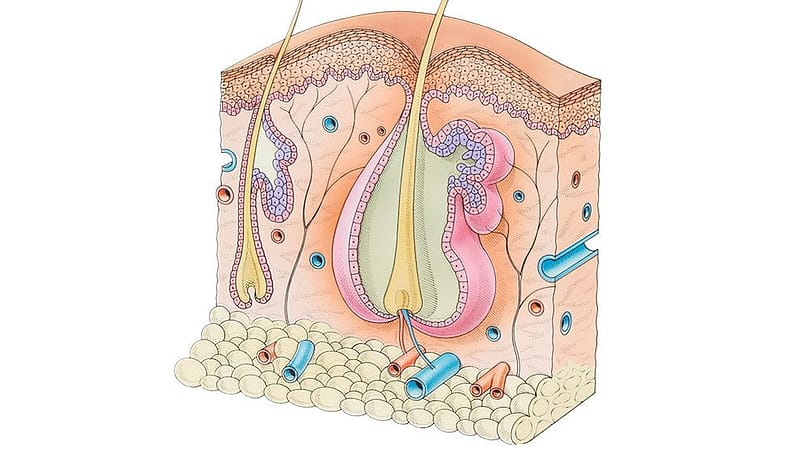
Anatomically, we can distinguish between three layers of the skin: The outermost layer (epidermis), the inner layer with its glands and nerves (dermis), and the innermost layer (hypodermis), which is composed mainly of fat cells.

Skin as a Sensory Organ

The skin has many functions and there are numerous processes in the organism that it is involved in. Of particular importance is its function as a sensory organ. We can distinguish between three main groups of sensory perceptions that are highly refined in humans. These are:

  • Our thermal sense, which allows us to perceive the temperature around us and compare it with our own temperature. The thermal sense serves to maintain our body temperature, and also helps to protect us against frostbite and burns. Our body temperature also affects our physical well-being.
  • Our tactile senses, which we use to perceive touch, pressure and vibrations.
  • Pain receptors, which allow us to perceive imminent or already occurring tissue damage due to external influences (such as injuries) or from the inside (such as inflammation).

2

1.5 to 2 m² total surface area

4

3 to 4 kg total weight

20

km of blood vessels

3

weeks to renew the upper cell layers

300000

sebaceous glands

2

million sweat glands

60

million nerve endings

60

billion cells

Mirror of the Soul

Everyday reactions, such as becoming pale with fright and fear or blushing with shame, embarrassment and other emotions, show the importance of skin as a mirror of the soul. Outside stimuli can influence our emotional state of mind. Depending on how sensitive we are, sensations of cold and heat, pressure and pain can affect us in different ways. Our skin and soul are intimately linked. Many skin diseases can lead to mental health problems or stress. Conversely, many skin diseases have a psychosomatic background. In Anthroposophic Medicine, we seek to gain a deeper understanding of illnesses. Special attention is given to the relationship between the skin and physical as well as emotional processes.


© Skin cross-section Getty Images

All figures are approximate.

Daily sensitive skin care routine with soothing organic Almond. SAVE $20.80

Set

Only {{ 3900 |formatPrice |currency }} instead of {{ 5980 |formatPrice |currency }}

Five best-sellers for a full super food experience. SAVE $50.50

Set

Only {{ 8500 |formatPrice |currency }} instead of {{ 12350 |formatPrice |currency }}
Online Exclusive

Natural nourishment for healthy, radiant skin. SAVE $55.60

Set

Only {{ 8900 |formatPrice |currency }} instead of {{ 14460 |formatPrice |currency }}

Author

Weleda New Zealand

Dr. Frank Meyer

General Physician

Dr. Mayer is specialised in Anthroposophic Medicine and is an expert on Holistic Medicine. He lives and works in Nuremberg, Germany.

MORE ADVICE & TIPS ABOUT SENSES

show all
Senses

Natural fragrances

With your eyes closed, inhale the fragrance and let it do its magic. Scents have a remarkable effect on us. They awaken our powers of imagination and evoke our emotions.

Read More
Senses

Helping Your Child to Have a Good Night’s Sleep!

Helpful Advices from a Paediatrician and Sleep Expert

Read More

RELATED ADVICE & TIPS

Beauty

Why Do Lips Become Dry and Chapped?

Find out what causes it and how you can sustainably protect and care for your lips.

Read More
Beauty

Mastering Makeup: Top tips from experts to use Skin Food

From creating a radiant base to achieving the perfect dewy glow, we’re sharing top pro tips on how to incorporate Skin Food into your routine for flawless, glowing skin

Read More
Beauty

Pigment spots, age spots and freckles: Causes and tips

Many people dream of flawless skin, but pigmentation spots, especially on the face, are normal for most people and not a health problem. Are you bothered by them and want to get rid of them? Find out which active ingredients can help to minimise pigmentation spots.

Read More
Beauty

Collagen – What Is It and Why It Matters.

As collagen production slows with age, wrinkles can appear. Discover how collagen supports skin health and helps maintain a youthful appearance.

Read More