
Why touch and closeness are important for babies
How skin-to-skin contact strengthens the parent-child bond
From the womb to the belly
If everything goes well after birth, your baby can lie directly on your bare chest or that of your partner. This first skin-to-skin contact in the so-called magic hour is important because it strengthens the emotional connection between you. During the bonding process, hormones are released that help you build a close and loving relationship. In the first few days, you learn to sense your baby and recognize their needs. This way, your child can develop a healthy basic trust. Even if there are obstacles after birth, such as a difficult delivery or illness, you can make up for bonding moments and still build a strong bond.
How skin-to-skin contact gives your baby security
For your newborn, the most important feeling is being close to you or your partner. Babies notice when parents pay attention to their signals and respond to them. When they feel safe and secure, they feel protected from danger. Especially in the first months, this security through physical closeness is particularly important. Whether in your arms, in bed, in a sling or carrier – the baby feels comfortable through your closeness and is also kept warm. At first, your baby cannot regulate their body temperature well on their own, and body contact helps with this. Your baby's skin is full of receptors that respond to touch. When the brain perceives gentle skin-to-skin contact, the hormone oxytocin is released. Loving physical contact always triggers the release of oxytocin, which relaxes both of you, reduces anxiety, lowers blood pressure, decreases cortisol levels, and strengthens the immune system. These positive feelings reinforce the bond between you and your child.
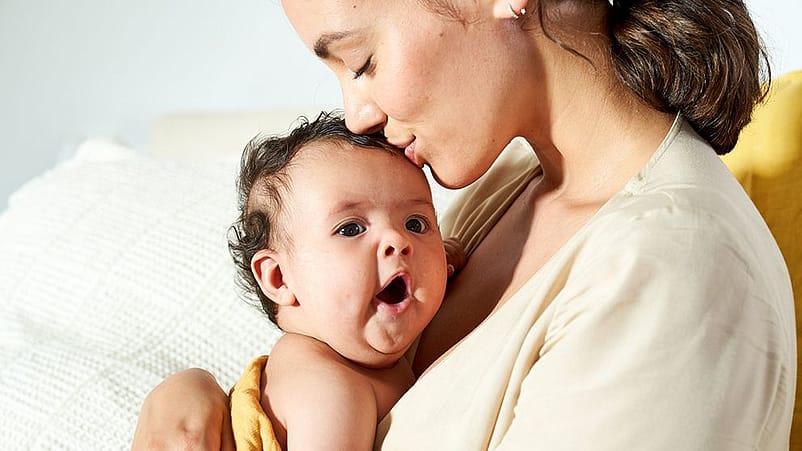
Why touch and closeness are essential
Touch is very important for the healthy emotional development of your child. Even in the womb, your baby feels touch, at birth they experience physical contact and are held by your hands for the first time. In everyday life, your baby experiences touch while breastfeeding, being carried, cuddling, and especially during personal care when they feel direct skin contact. If the baby feels safe and secure, they can begin to make their own experiences on this basis. From this sense of security, trust develops. Your child feels that their needs are seen and met. This way, they can gradually make their first experiences in this completely new world.
„By carrying, holding, and cuddling, your child gains valuable touch experiences. These not only strengthen the mutual bond but also have a positive effect on brain development.”
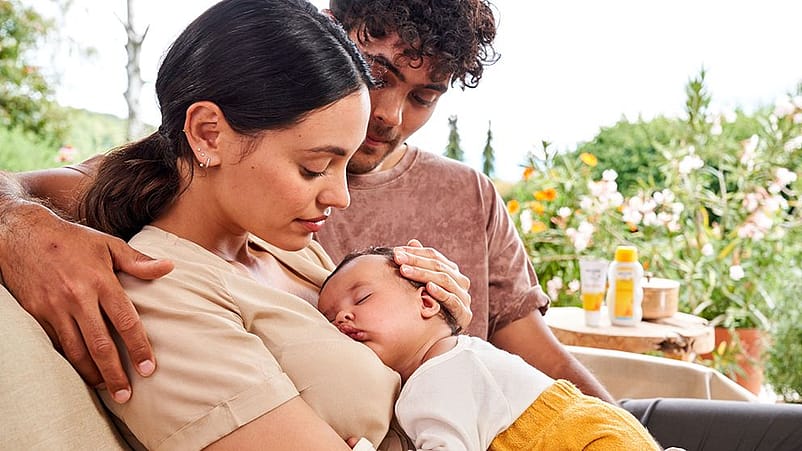
Especially in the first years, parents may sometimes feel that their child is constantly seeking physical closeness. From the very beginning, everything is geared towards the baby gradually becoming more independent and discovering the world on their own. Parents remain the safe haven in this process, where the baby receives love, courage, and confidence. By carrying, holding, and cuddling, your child gains valuable touch experiences. These not only strengthen the mutual bond but also have a positive effect on brain development. The sense of touch is one of your baby's most developed senses at birth. It enables the perception of touch, temperature, and pain, as well as the orientation of the body in space, also known as the sense of spatial position. Even as a baby, special receptors in the skin are available for this purpose. The information received in this way is transmitted to the brain and processed there. In each hemisphere of the brain, in the 'sensorimotor cortex' of the cerebral cortex, there is a kind of map of the body with its individual areas. Depending on the sensitivity of the body region, these take up different amounts of space there. Lips, tongue, and fingertips, for example, occupy more space than larger but less sensitive body parts like the back.
What makes the baby's mouth area so sensitive?
You can quickly see from your baby's behavior that the mouth area is particularly sensitive. Everything that is exciting and new is not brought to the mouth by chance – the sensitivity to touch is simply much stronger there than in other parts of the body. Through the mouth, your child discovers the world and gathers important information about objects and their properties. Even at the age of five, the face still reacts more sensitively to touch than the hands. The mouth area is also very sensitive when eating, and babies can be easily irritated there. For example, when you breastfeed your child, it may happen that after a touch on the cheek, the baby turns its head away. And when starting solid foods, your child may be bothered if you wipe the spoon off on their lips. If parents constantly wipe their child's mouth while eating, it can disrupt the meal and sometimes even cause the child to stop eating altogether. When caring for your baby, it is also important to pay special attention to the sensitive areas. Especially the mouth and diaper area should be touched very gently and carefully so that your baby feels comfortable.
How parents can support their baby's development through touch
Loving touches and varied physical contact not only help your baby get to know their own body better, but also promote brain development and cognitive abilities. When changing and caring for your baby, they feel your touch, whether your hand is warm or cold, whether you press gently or a little more firmly. If you combine care with a gentle massage, your baby can perceive their body even better and expand their internal map. This way, changing and bathing become not only a treat for body and soul, but also a valuable learning experience for your baby. The map of one's own body in the brain is already formed during pregnancy. Every touch the fetus experiences in the uterus shapes it. After birth, it continues to develop through the experiences the baby now has. This map also interacts with other regions of the brain. It stimulates them through its own activity. Diverse, respectful physical contact and loving touches therefore not only help the baby to form an image of their own body and understand it better. They also stimulate other developments in the brain as well as cognitive abilities.
Tip:
- Trust your instincts and observe your baby's reactions when you touch them. Parents do not need to memorize specific massage techniques – it is much more important to be sensitive and fully attentive to your child. Enjoy the many small touches in everyday life, not just during diaper changes. They are good for the baby, strengthen your bond, and are also a valuable learning experience for your child.


Whether it's changing diapers, bathing, or general body care: the baby feels every touch on its skin. It notices whether your hand is warm or cold, whether it applies stronger or lighter pressure. Baby care can be combined by parents with a gentle stroking massage. This gives the baby the opportunity to perceive its own body even more intensely and to further develop its internal map. Every care ritual not only strengthens the body, but also the emotional connection. Parents learn to lovingly touch the baby, to pay attention to its signals, and to respond to them.