
Bathing the baby: Tips for a relaxing bath time
Bathing the baby – When, how long, and how often should the baby be bathed? Here, parents can find answers to the most important questions about baby baths.
A bath is always possible and almost always beneficial. It can become a regular ritual and have a relaxing effect on your baby. For parents and baby, it is an opportunity to take a little break from everyday life and enjoy togetherness. Baby bath time is family time, where you can enjoy closeness, touch, and the joy of movement in the water together.
Practical tips for baby bath time
- Take your time: The newborn doesn't need to bathe immediately. Initially, daily cleaning of the skin with a damp cloth is sufficient.
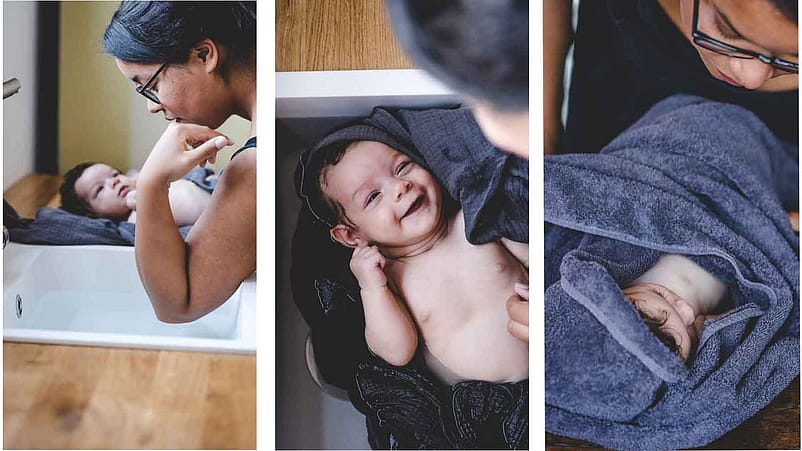
- Get support from your midwife: They can show parents how to hold the baby during bath time. Special baby bathtubs are suitable for newborns and small infants: They require little water, are practical, and provide a sense of security for both you and the child due to their snug boundaries. A sink is often a good option as well.
- Before bathing, it is important to check the water temperature. The best way to do this is with your elbow. Around 37°C is ideal, as this roughly corresponds to our body temperature – similar to what the baby knows from the protected womb. On the sensitive skin of the elbow, this temperature feels just right.
- Larger infants and toddlers can also bathe in a regular bathtub with appropriate support. Initially, a bath of five to eight minutes in 37-degree warm water is sufficient. As the child grows and doesn't cool down as quickly, the bath time can gradually be extended.
- Bathing can be a lovely ritual for everyone. Observe your baby closely to see how it reacts to the water. Not every baby is a fan of water.
- If your baby enjoys the water, it can bathe several times a week. However, if it feels uncomfortable, regular bathing is not necessary. You can always try again gently.
- Let your baby gently dip its feet into the water first. This helps it get used to the wet element. A cloth, such as a muslin cloth, placed on your baby's upper body in the water provides a boundary and a sense of security.
- If your child relaxes during bath time, it makes sense to bathe it in the evening hours. Some babies become very alert during bath time: In that case, the morning is the ideal time for a bath.
- Since small children lose warmth through their heads, it is advisable to wet and wash the head and hair last. Weleda Baby Calendula Shampoo & Body Wash is well-suited for this.
- After the bath, wrap your baby warmly, for example, in a pre-warmed towel. Gentle drying works best with a soft muslin cloth, which absorbs moisture well, especially in the skin folds. You can then rub the sensitive skin with Weleda Baby Calendula Baby Oil Fragrance Free.
Have you discovered our Baby Baths?


Should the baby bathe after birth?
The immediate time after birth belongs to you as a family. Intimate skin contact between the baby and parents and the changed hormone composition ensure that a bond is formed between parents and child. In the first hour after birth, the so-called magic hour, your child is particularly alert and soon begins to actively search for the breast.
A bath too early would interrupt the skin contact between mother and child and disrupt the breastfeeding relationship that is just developing. Additionally, bathing too early can lead to hypothermia and adjustment disorders in the newborn. It is therefore not recommended to bathe the newborn immediately after birth. Gently drying them off and wrapping them warmly in direct skin contact with the mother or father is completely sufficient. This also allows the baby's skin to gradually adjust to the world outside the womb.
By about four months, the baby's skin has adapted well to life outside of mom's belly. Now, bathing once or twice a week is fine; more often if everyone enjoys it.
What is the purpose of vernix caseosa?
The so-called vernix caseosa is a nourishing and protective layer that sometimes still completely or partially covers the newborn's skin at first. It does not need to be removed and gradually absorbs into the skin. In the first days of life, it supplies the sensitive skin with lipids and moisture and ensures the correct pH value of the skin surface.
Residues of the vernix often remain as dry deposits in the baby's skin folds. You should gently remove them after a few days with a care oil, such as Weleda Calendula Baby Oil Fragrance Free, as the folds could otherwise become inflamed. From this point on, you can also bathe your baby for the first time. You don't need to worry about the umbilical cord stump; it doesn't interfere, and you don't have to wait until it falls off. After the bath, the navel is gently patted dry.
What time of day is ideal for the baby's bath?
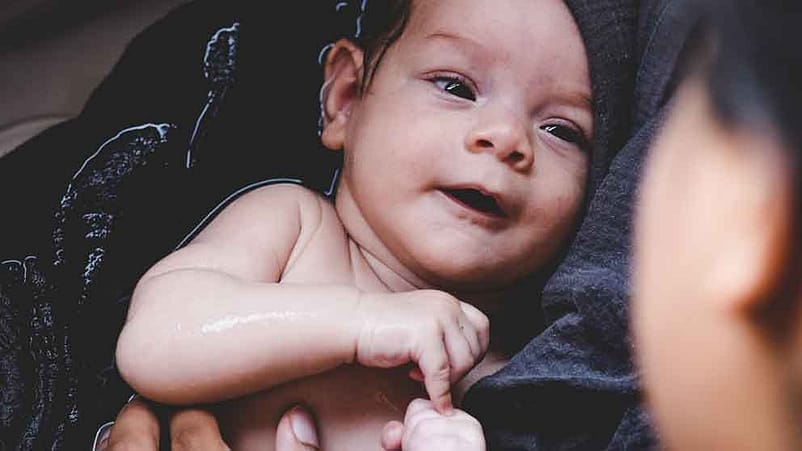
Bathing can either stimulate or calm babies: If your baby becomes very lively and active during the bath, it might have difficulty falling asleep afterward. In that case, it makes sense to bathe the baby in the morning or after a nap. Parents will find the right time in the coming weeks and months as they get to know their baby better and discover what works best for them. Hungry babies are rarely relaxed. The baby should be well-fed to enjoy the bath. Sometimes, a full stomach might cause the baby to spit up a little milk. That’s not a problem. Bathing uses up energy; many babies want to nurse or have a bottle again after the bath.
„Midwife's tip: Babies like consistent routines; they provide security and orientation. So, if you’ve found a good 'bath time,' stick to that time of day.”
How often should the baby bathe?
If the baby enjoys bathing, it can bathe more often. It’s also okay if it doesn’t bathe for a few days. And if you feel the baby doesn’t like bathing, it doesn’t have to. You can always try again later. Generally, children feel comfortable in water once they can sit freely and independently.
Initially, babies should stay in the water for three to eight minutes. Older children can bathe longer as they don’t cool down as easily as the little ones. The bathroom should be cozy and warm, at least 24 degrees, and the water temperature should initially be 37 degrees.
How often should a baby with atopic dermatitis bathe?
A baby with atopic dermatitis should only be bathed about 1–2 times a week to avoid further irritating or drying out the sensitive skin. Ensure a water temperature of 37 °C. Parents should ideally use mild, re-lipidizing bath additives specifically designed for sensitive skin or atopic dermatitis. After bathing, gently pat the baby's skin dry. Special care for sensitive skin strengthens the weakened skin barrier and retains moisture.
What water temperature is suitable?
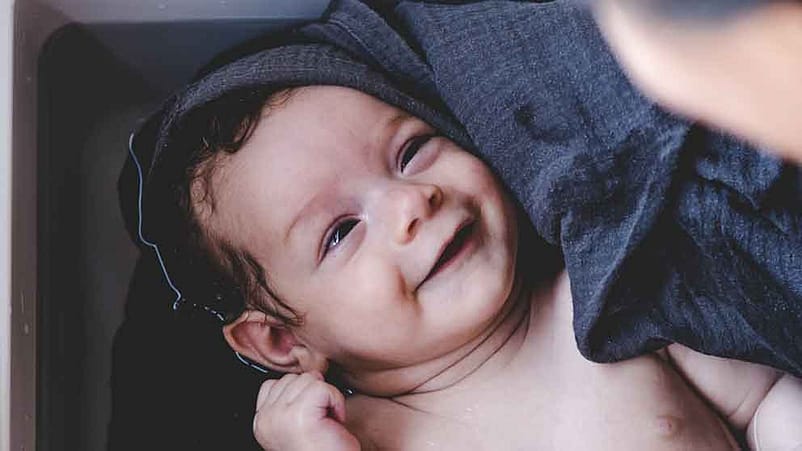
The sensitive skin of the elbow reliably indicates whether the water is too hot or too cold. Dip your elbow deep into the water: If you find the water temperature comfortable at this spot and it is neither too hot nor too lukewarm, it will also be comfortable for the baby. Hands and fingers have adapted to higher temperatures over our lifetime and are therefore not as suitable for accurately assessing the temperature.
What goes into the bathwater?
Clear water alone can dry out delicate baby skin more. If you bathe the baby with a bath additive specifically developed for sensitive baby skin, it gently cleanses the skin of cream residues and excretions. Instead of bubble baths, mild additives with re-lipidizing substances like almond oil and skin-soothing ingredients like calendula and chamomile, as found in Weleda Baby Good Night Bath and Baby Cold Time Bath are recommended. If your baby has very dry skin, you can add a small amount of Calendula Baby Oil Fragrance Free to the water. Since the oil nourishes the skin during the bath, it also makes it a bit slipperier and less grippable: Therefore, make sure to hold your child securely. The Weleda Baby Good Night Bath is suitable for restless and overstimulated children: Organic thyme supports the warming process, and bathing in warm water has a balancing effect.
These care products are ideal for baby bath time

Does the baby need a baby bathtub?
Initially, newborns can also be bathed in a clean sink. Special bathtubs for babies are made of lightweight plastic, have a drain at the bottom, and can be placed anywhere. Avoid bath cushions, seats, and floating rings if possible.
They are unsuitable because they interrupt the intense skin contact between you and the baby during bathing and may tempt you to leave the baby – even briefly – unattended. Instead, gently let the baby glide into the water and keep it close to you, which provides a sense of security. The buoyancy of the water and the almost unlimited freedom of movement are new and unfamiliar for the baby. Together with you, the baby can adapt to the new situation and eventually even enjoy the bath. A calm and shared bathing experience can strengthen the bond between parents and child.
How do I hold the baby safely during bathing?
Before bathing, place everything you need within reach so you can fully focus on the baby. The safest way to hold the baby is with your arm. It's quite simple: Gently slide your left arm under the baby's neck and hold their small shoulder with your hand. The baby will now rest the back of their head on your forearm, and their head will be securely supported. With your free hand, you can touch and wash the baby. Your baby will enjoy the attention and the sense of security you provide.
By the way, babies usually feel more comfortable when they can touch the end of the tub with their feet. Once your child can sit independently in the tub, the bathwater should only reach up to their waist.
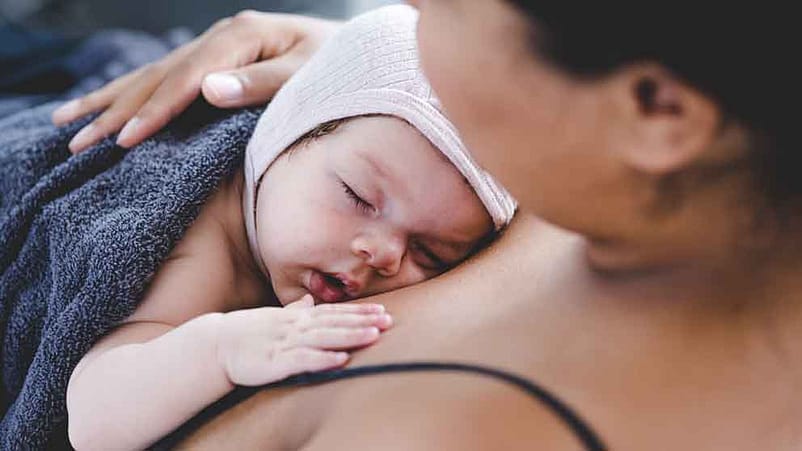
„After bathing, the baby loves to snuggle warmly and securely in mom's or dad's arms for a while.”
What care does the baby need after the bath?
Gentle drying
Immediately after the bath, babies and toddlers are wrapped up all over their bodies and gently but quickly dried. The best way to do this is with a pre-warmed soft terry cloth. If there is no heating nearby, you can also pre-warm the towel on your body. For drying, a soft muslin cloth is particularly suitable in the skin folds, as it absorbs moisture very well.
Natural skin care
Weleda Calendula Baby Oil Fragrance Free nourishes and protects sensitive baby skin. You can combine skin care with a soothing baby massage. The sensitive skin in the diaper area benefits from some Calendula Care Cream.
If it is cold outside, you should not go out directly with the freshly bathed baby. Your child's body and hair must be completely dry so that no additional evaporative cooling occurs, which would draw warmth from the little body. A hat protects the head from heat loss.
Even in summer, babies can easily cool down. This is especially the case when the skin is wet and a light breeze blows. Both draw warmth from the little organism.
Why does the baby cry after bathing?
If the baby cries after bathing, there can be many reasons for this. Perhaps it was startled because the state of pleasant weightlessness was so abruptly ended, or it does not like the sudden change from warm bath water to cooler room air? Or was it just about to relax really nicely, and now it finds it bothersome to be dried and dressed again? Did the full bath stimulate its appetite? Bathing makes one hungry, as it is exciting and consumes a lot of energy: The baby often demands closeness, warmth, security, and food emphatically. With a (breast) meal and lots of skin contact, well-warmed by your body, covered with warm towels and a warm blanket, you can calm and satisfy all these needs. Once the baby has settled down, you can gently care for, diaper, and dress it.
With a loving massage after bathing, parents help their baby become familiar with their own body. With your touches, you give it love, trust, and security.